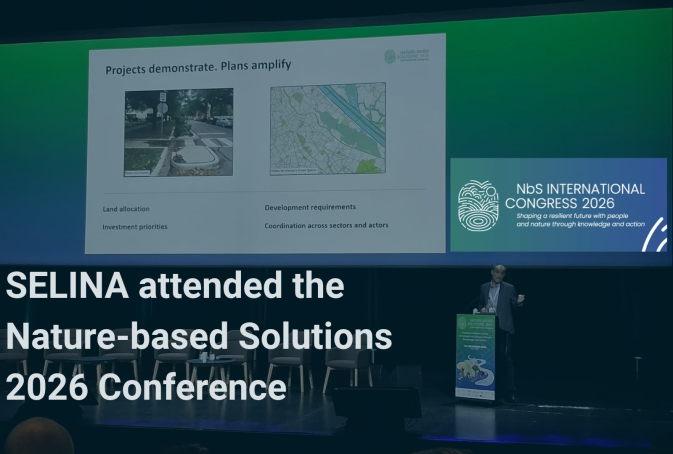
SELINA contributes to discussions on urban Nature-based Solutions at international congress
SELINA was represented at the Nature-based Solutions (NbS) conference, held between 2-6 November 2026, by Prof. Davide Geneletti from the University of Trento. At the event, he delivered a keynote address exploring how urban planning can support the effective implementation and long-term performance of Nature-based Solutions.
Titled "Planning urban Nature-based Solutions across space, over time and below the surface", the keynote presented insights into the planning conditions needed to maximise the benefits of NbS in urban environments. Drawing, among other examples, on outcomes from the University of Trento's Demonstration Project (DP), the presentation also acknowledged SELINA's contribution to advancing knowledge and evidence for more sustainable decision-making.
The presentation explored three interconnected dimensions that are essential to understanding and improving the performance of urban NbS.
The first dimension, planning across space, highlighted the importance of moving beyond isolated green interventions towards coordinated urban portfolios. By combining ecosystem protection, restoration and new interventions, cities can create complementary functions and strengthen the overall benefits of NbS. The presentation also demonstrated how the spatial arrangement and interaction of different measures can influence their effectiveness, particularly in areas such as urban flood management.
The second dimension focused on planning over time, recognising that the benefits of NbS do not necessarily emerge immediately or remain constant. Ecological processes, the maturation of natural systems and ongoing management all influence how benefits develop. Effective planning must therefore consider these changing trajectories alongside funding opportunities, political cycles, landowners' decisions and the expectations of citizens and other stakeholders.
Finally, the keynote addressed the importance of looking below the surface. Urban NbS depend not only on visible vegetation and green spaces but also on the underlying ecological conditions, including soil biodiversity, carbon stocks and hydrological properties. Different soil conditions and underground structures can significantly influence how urban ecosystems function, demonstrating why green-space targets alone cannot provide a complete picture of the benefits delivered by NbS.
A central message of the presentation was that successful urban NbS planning requires a more integrated approach, considering how interventions work together, how their benefits evolve and which ecological conditions support their performance. By incorporating these dimensions into urban development requirements and benefit assessments, cities can create more effective and lasting solutions for people and nature.
Through its research and Demonstration Projects, SELINA contributes to the evidence base needed to support more informed and sustainable decisions about natural capital. The insights shared at the congress further highlighted the importance of connecting scientific knowledge with practical planning approaches to help cities make the most of Nature-based Solutions.